A STUDY IN KINETIC IMPRESSIONS
This inquiry explores the translation of kinetic flow into a permanent, physical artifact. It’s a method for taking an abstract path, a trace, and turning it into a three-dimensional flow, where the passage of time can be read on a surface.
The work translates fleeting events into a permanent, physical memory, seen in the erosion and wear created by the flow of a crowd. This concept was explored through two distinct materials: the analogue material of human movement and crowd flow, and the digital material of computational experimentation.
The process began by designing the primary vectors of movement through the space. Each prominent red curve visible in the final output represents an artery of high-traffic kinetic flow. These paths were then used to generate a relational field across a series of stacked planes. Through a set of computational rules, the proximity of any point to one of these arteries was translated into a physical ‘kinetic impression’, creating a gradient of texture that maps their influence. The result is a data sculpture where the layered mesh becomes a topographic artifact of flow.
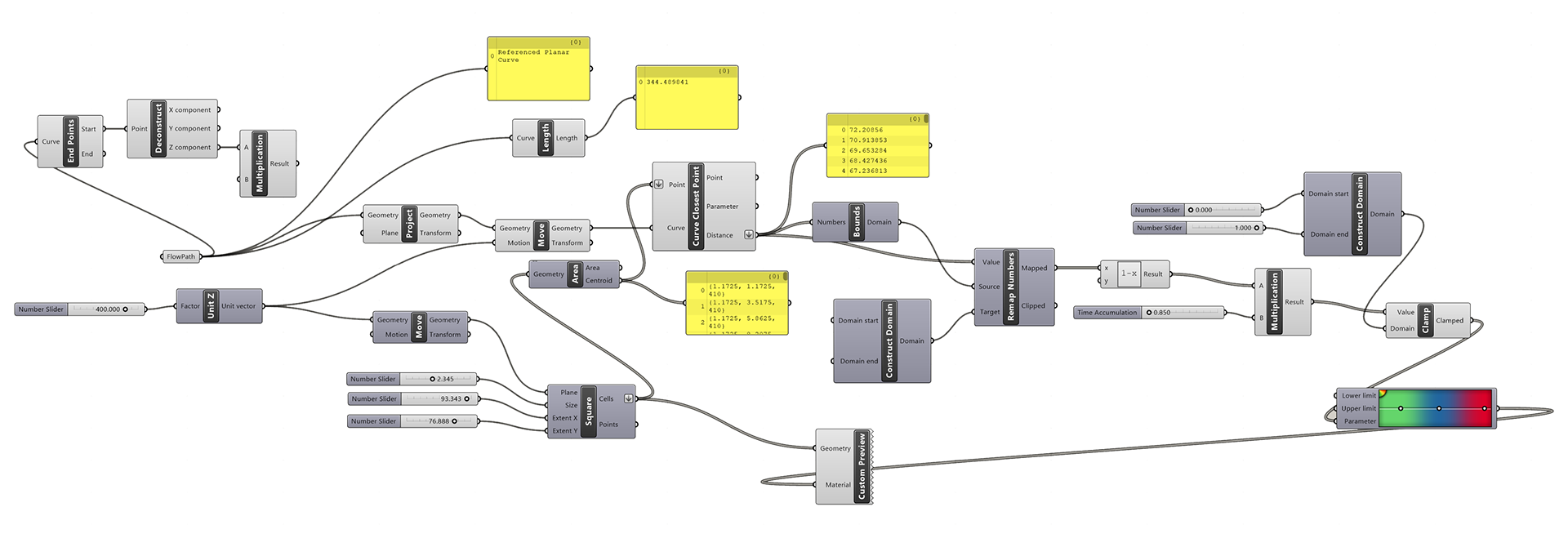
COMPUTATIONAL WORKFLOW
This process translates an idea into form by creating a living connection between a designed line and its surrounding space. It allows the influence of a path to ripple outwards, sculpting the surface with a field of color and texture.
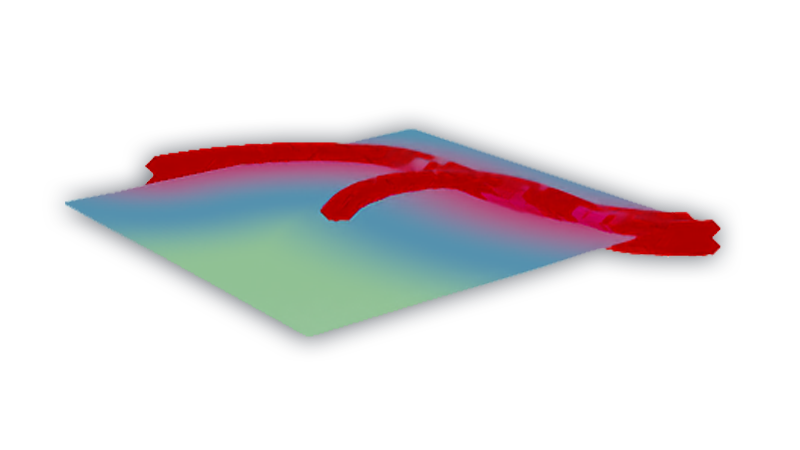
Crowd Flow Visualisation Testing | Desire Lines Creation Testing
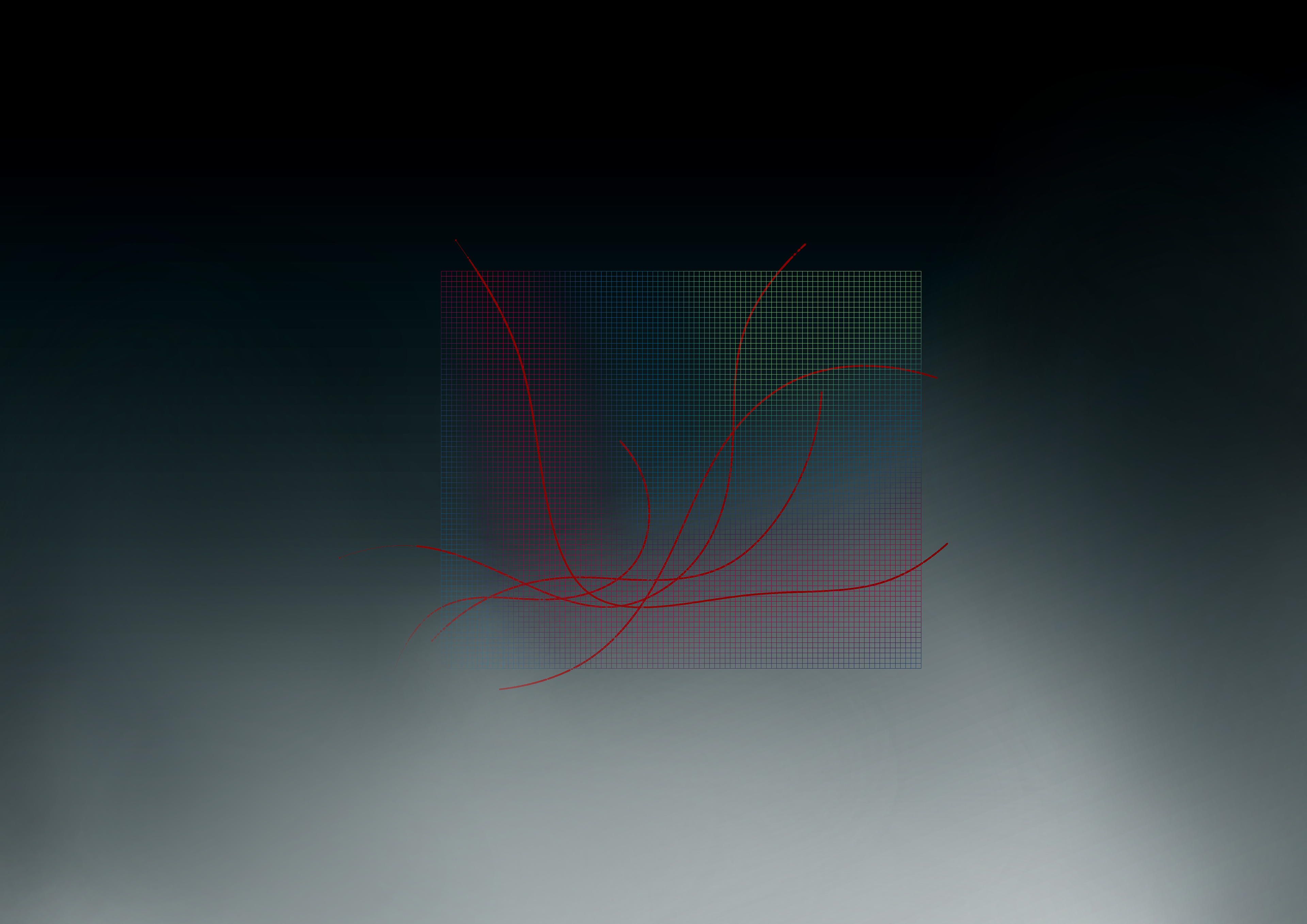
Crowd Flow Visualisation Testing | Potential Desire Lines of Crowd Flow Movement through a Space
THE ELEMENTS
The work begins with two core components: a surface, represented by a grid of points, and a path of movement, embodied by a single ‘desire line’ curve.
THE INFLUENCE
The script then measures the influence of the curve across the surface. It calculates the proximity of every point on the grid to this central path, creating a unique value for each based on its distance.
THE EXPRESSION
Finally, these distance values are translated into a visual language. The resulting ripple of color and density from the desire line shows how kinetic impressions congregate near the path and dissipate further away, giving physical form to the curve’s invisible influence.
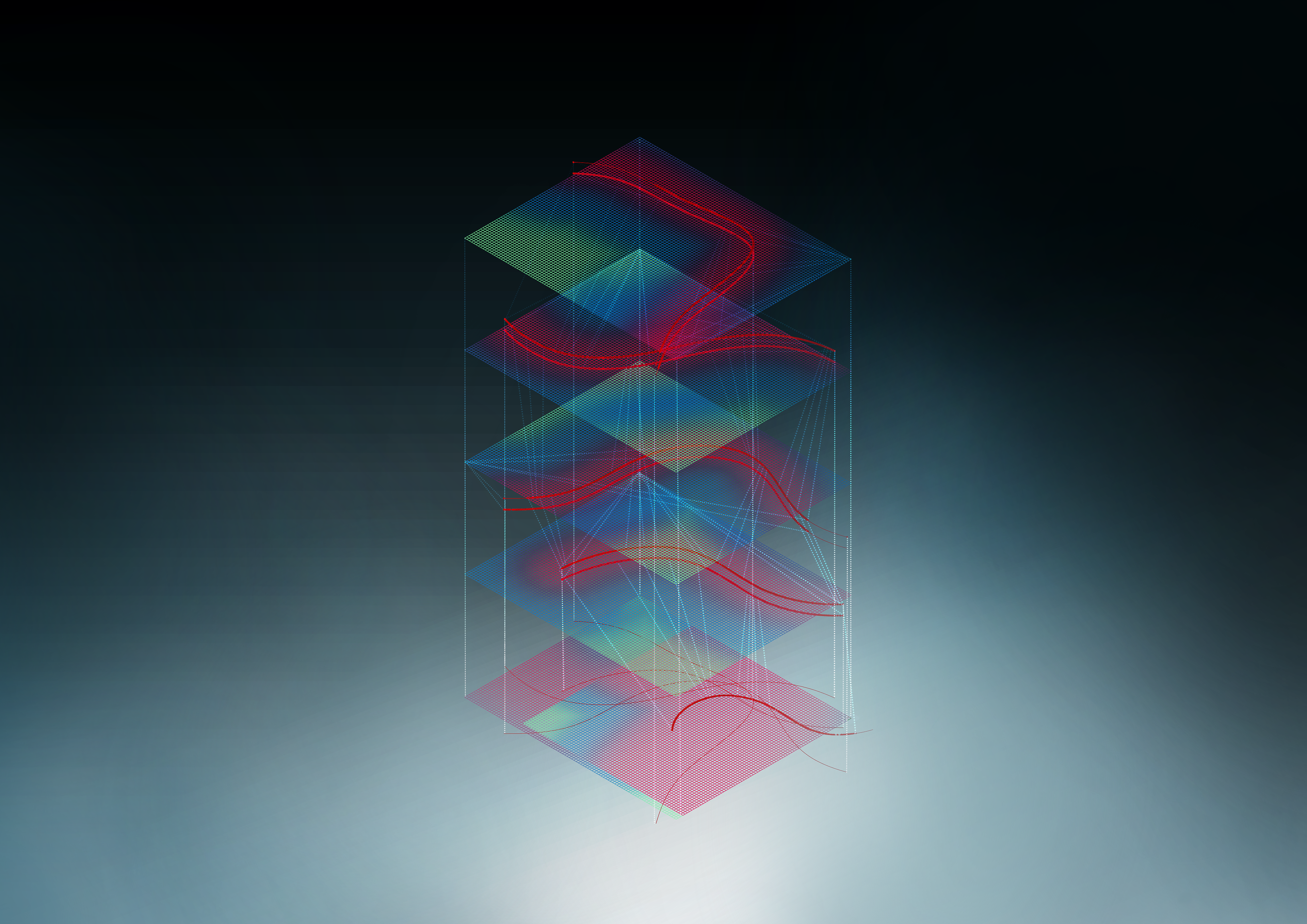
Crowd Flow Visualisation Testing Axonometric | Potential Desire Lines of Crowd Flow Movement through multiple Spaces
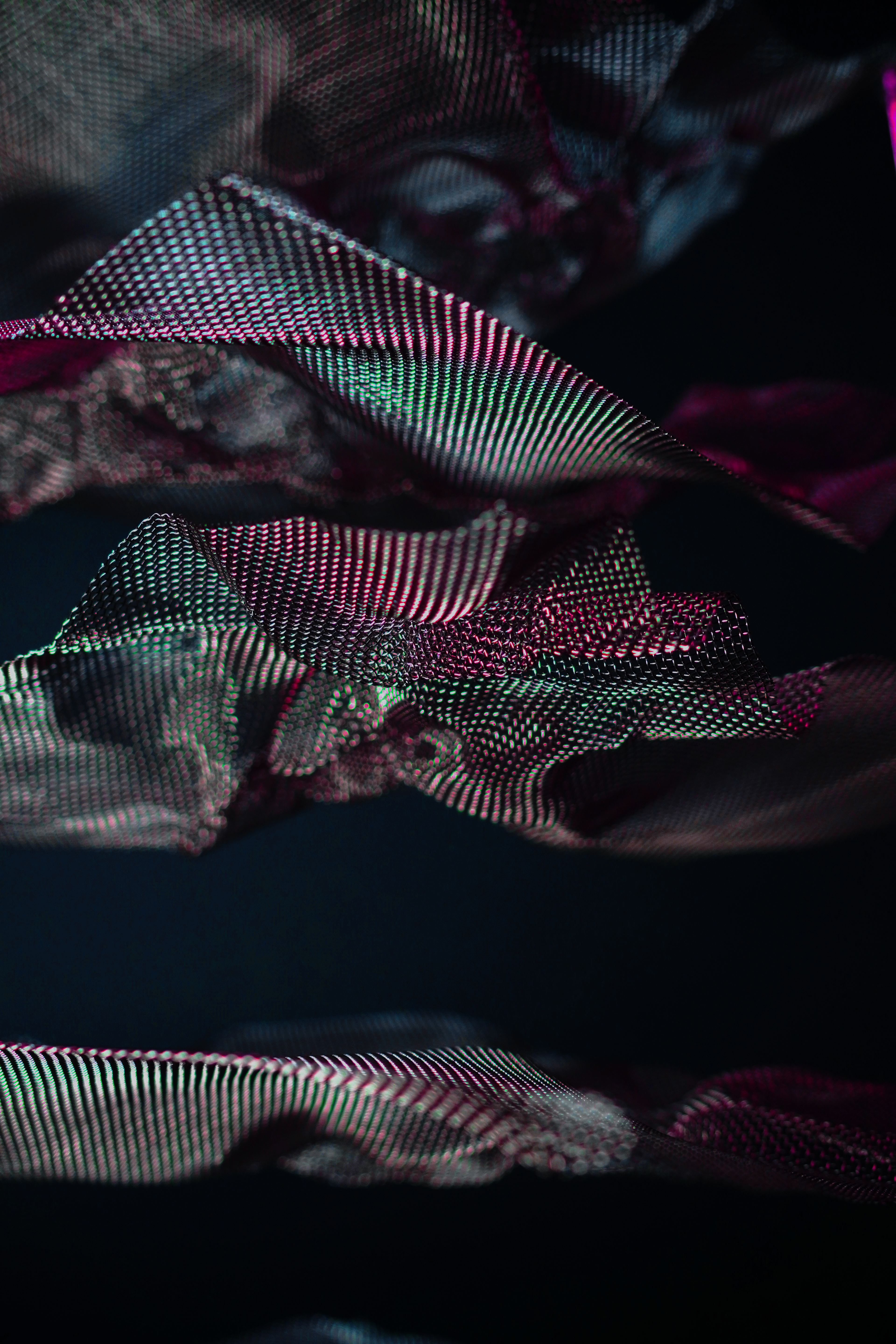
Physical Model | Micro View
Physical Model | Micro View
Physical Model | Micro View
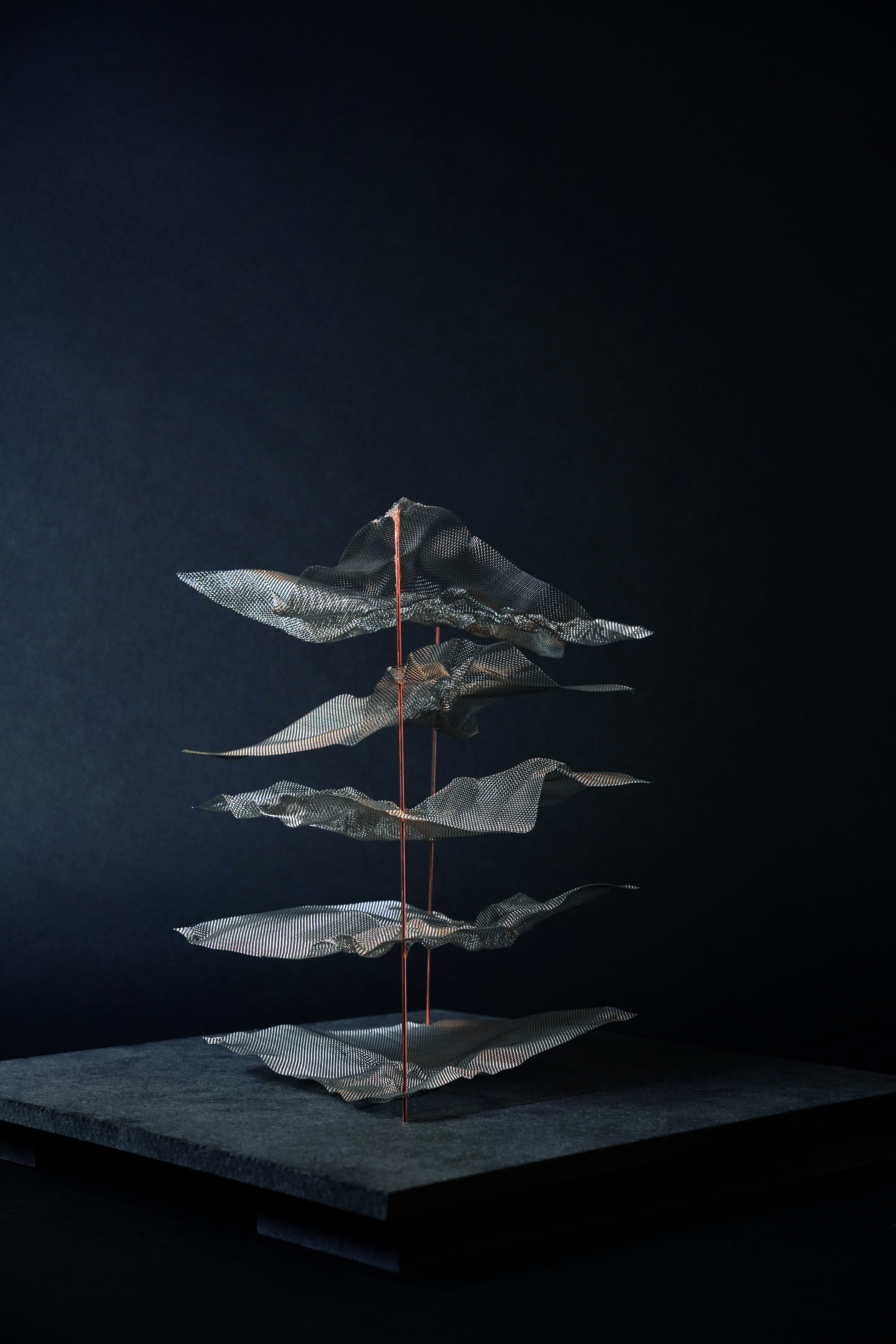
This physical model translates the computational explorations into a tangible artifact. Using hand-formed stainless steel mesh, each layer represents a distinct level of kinetic footfall, its surface impressed with the echoes of movement.
The delicate topographies are suspended by copper wire, creating a dialogue between the industrial nature of the materials and the organic, invisible patterns of crowd flow. The model serves as a final, physical study of how fleeting movement can be captured and transcribed into enduring form.
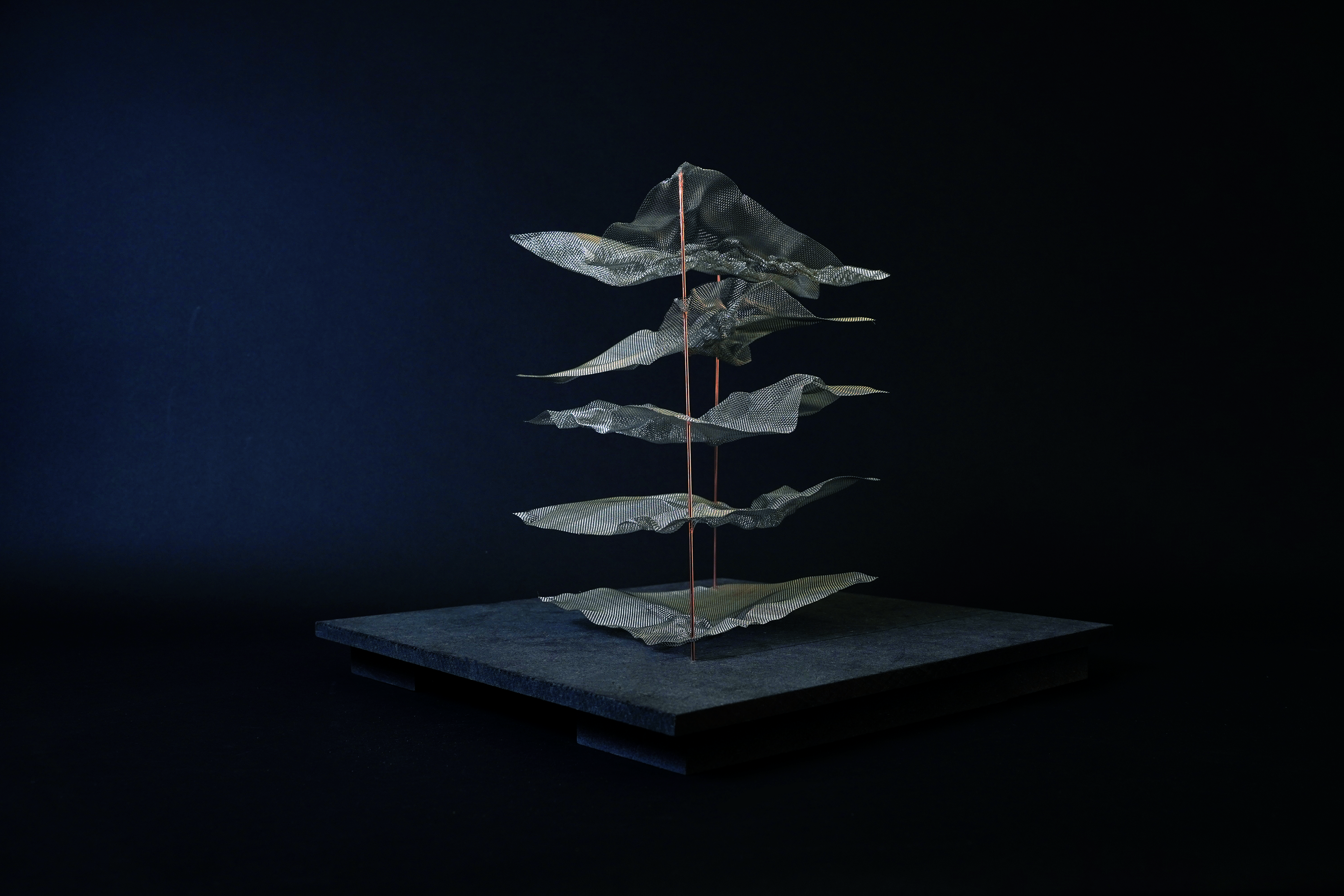
Aluminium Mesh & Copper Wire Physical Model